The garden plot failed in 2014!
There is no other way to say it. Except for the herbs which flourished until frost all the other plants in the garden were dead by the end of September.
The creeping death moved from one plant to another and without fail turned even the healthiest plants into brown shriveled dead non-growing things.
I was unwilling to admit this and never quite finished the posts from late September that documented this death. But I have located all the photos and will update those posts in the next few weeks so others can scroll through and see what happened.
It is my opinion, based on the types of plant death that occurred and the fact that the herbs were mostly unaffected by this problem, that the soil was to blame for the issues. The soil may have had plenty of nutrients or not, I did not have it tested once the plants started dying from diseases that were not soil quality related. The soil was littered with several identifiable bacteria. Check out my post on what was wrong with the tomatoes to see what I mean.
The garden plots have been traded to the City of Elmhurst to use for flood retention so will not be used in the coming year. It is assumed we will get new areas to plant in for 2015, but I have not been informed of any locations as yet. I am pleased that these plots are not to be used again as they were too far gone to repair and would have had to have been left fallow for a couple of years to start any possibility of repairing the soil and killing off the bacteria in the soil.
What I wanted to be able to do in 2014 was raise enough vegetables to freeze and can and be able to use them all winter and post about the process of preserving the vegetables. However, there was never enough harvest to go beyond our personal use for the days following a harvest. The herbs were very prolific and showed no sign of disease and I am still using the herbs I dried from the community patch. Herbs are generally resistant to soil borne illnesses so their success only reinforced my belief that the soil was healthy in nutrients but also rampant with bacteria.
What I did learn and want to pass on as an important note is that if you have a community plot and are hoping to grow old-fashioned heirloom varieties of plants, you may want to reconsider. Many hybrid plants were hybridized to make them more resistant to diseases that occur naturally in the soil and are hard to remove. As a result they would have been much more resistant to the diseases that eventually killed the plants. We grew a couple of hybrid peppers and those were the last plants to die in the garden.
The cucumber was the most damaged by soil issues and the sheer number of bugs the garden had because of the previous winter. Squash and melon, all grown from heirloom seed, were the first to show signs of problems.
 The various beans did okay but did not continue to produce after an initial harvest. We were able to save enough seed that we can probably grow more next year. The tomatoes were slow and had damaged fruit, but probably would have lived longer and produced more except for the incredibly wet weather we experienced. The soil was not dry enough for them and their root systems and they eventfully rotted from the bottom up.
The sunflowers just died within days of reaching flowering stage. They were beautiful one week and dead the next.
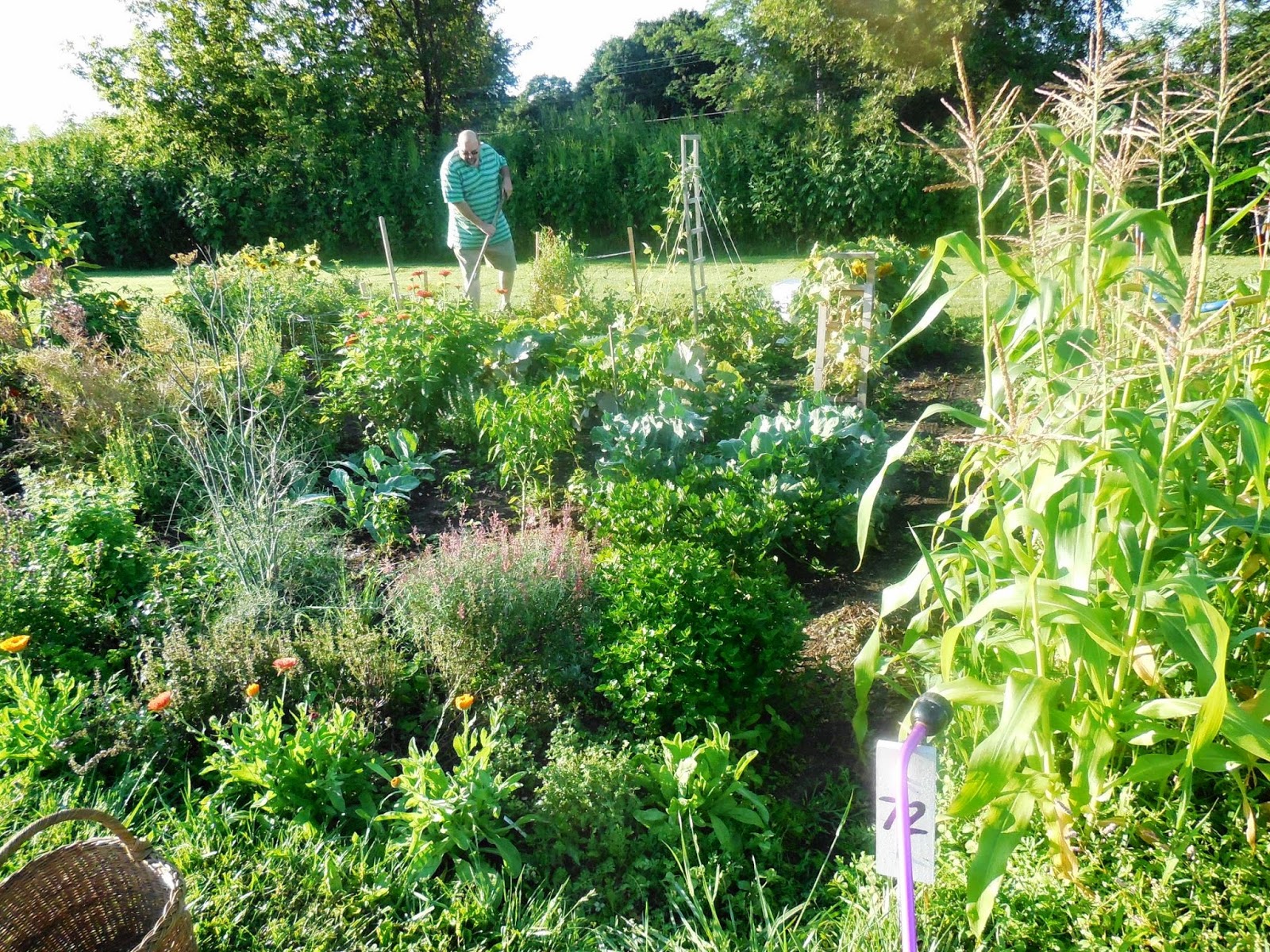
The zinnias, grown from seed, did very well, but the bugs did make finding a perfect bloom hard. The dahlias never flowered. The calendula, however, flowered until frost and I harvested hundreds of petals to use in tea.
There is no other way to say it. Except for the herbs which flourished until frost all the other plants in the garden were dead by the end of September.
 |
| the row of dead plants to the left are my neighbors dead sunflowers on 9-31-14 That collection of green in the middle is lettuce that reseeded in the space where the tomatoes used to be. |
I was unwilling to admit this and never quite finished the posts from late September that documented this death. But I have located all the photos and will update those posts in the next few weeks so others can scroll through and see what happened.
It is my opinion, based on the types of plant death that occurred and the fact that the herbs were mostly unaffected by this problem, that the soil was to blame for the issues. The soil may have had plenty of nutrients or not, I did not have it tested once the plants started dying from diseases that were not soil quality related. The soil was littered with several identifiable bacteria. Check out my post on what was wrong with the tomatoes to see what I mean.
The garden plots have been traded to the City of Elmhurst to use for flood retention so will not be used in the coming year. It is assumed we will get new areas to plant in for 2015, but I have not been informed of any locations as yet. I am pleased that these plots are not to be used again as they were too far gone to repair and would have had to have been left fallow for a couple of years to start any possibility of repairing the soil and killing off the bacteria in the soil.
What I wanted to be able to do in 2014 was raise enough vegetables to freeze and can and be able to use them all winter and post about the process of preserving the vegetables. However, there was never enough harvest to go beyond our personal use for the days following a harvest. The herbs were very prolific and showed no sign of disease and I am still using the herbs I dried from the community patch. Herbs are generally resistant to soil borne illnesses so their success only reinforced my belief that the soil was healthy in nutrients but also rampant with bacteria.
What I did learn and want to pass on as an important note is that if you have a community plot and are hoping to grow old-fashioned heirloom varieties of plants, you may want to reconsider. Many hybrid plants were hybridized to make them more resistant to diseases that occur naturally in the soil and are hard to remove. As a result they would have been much more resistant to the diseases that eventually killed the plants. We grew a couple of hybrid peppers and those were the last plants to die in the garden.
 |
| jalapenos still producing on 9-31-14 |
 |
| dead sunflowers |
The zinnias, grown from seed, did very well, but the bugs did make finding a perfect bloom hard. The dahlias never flowered. The calendula, however, flowered until frost and I harvested hundreds of petals to use in tea.
 |
| The yellow flowers along the front are calenula |

.JPG)
.JPG)
.JPG)
.JPG)
.JPG)
.JPG)
.JPG)
.JPG)

.JPG)
.JPG)
.JPG)
.JPG)
.JPG)

