Showing posts with label zinnia. Show all posts

Monday, August 25, 2014

Weekly update -- August 24

On August 21 we had two days (24 to 48 hours) of rain. Here is a map of the rainfall totals as of 7 Am on the 22nd. We are in the purple area near the top of the map with 2.51 inches of rain average, but in Elmhurst it was amazing the amount of rain that came from several different storms.

Courtesy of NOAA.gov
A press release from the City of Elmhurst stated this:

The City of Elmhurst experienced a significant rain event beginning Thursday, Aug. 21, and
continuing through the overnight hours into Friday, Aug. 22. Real-time data from the United States Geological Survey reveals several heavy bursts; 0.31 inches in 10 minutes just before midnight; 1.19 inches in approximately 30 minutes just after midnight; 0.26 inches in 10 minutes at 1:15 a.m.; and .42 inches in 20 minutes at approximately 2 a.m.

A total of 4 inches of rain fell in northern Elmhrust, where the garden is (only 2 inches down were I live.)

The roads to the garden were flooded and I expect that the garden itself was under water. I could not go see for myself as the roads to it were shut down.   The railroad tracks however, would act as a barrier keeping the rain in the lower area to the north of the tracks which is where the garden is located.

taken with my cell phone so not as clear but you can see the darkened earth from the rain

Lots of tomatoes, but nothing ripe because it is not that warm.  The rain is not making the tomatoes happy.  They may die from too much moisture.


When I was finally able to visit on August 23rd you could see the mud and dirt in the garden paths showed that a river must have run through the garden area.  It was too wet to walk even on the paths and I became a muddy mess just trying to harvest a few zinnias for the garden club competition.

Because of the rain, the weed population, especially in the back garden area around the squash and beans, has more than doubled.  Some of the weeds are taller than the squash and melons.  You can see the yellowish fruit about int he middle of the last photo.  That is the only melon so far on the musk melon plant, but with all this rain I am not sure the powdery mildew problem will be going away at all.

The peas were about to give us a second crop, but I think they are going to die back instead because of the wet ground.  The beans both bush and heirloom climbing beans seem to be faring well, but I could not harvest them  for fear of ruining the soil around them.

All I did was cut my zinnias.

You can see the remnants of the river in the path to the right but the broccoli rabe and hot peppers seem to be doing well despite the soaking.

I did not stay very long, as I was sinking into the ground everywhere I stepped both in the grass around the patch and on the garden paths too.

Monday, August 18, 2014

Weekly update - August 17

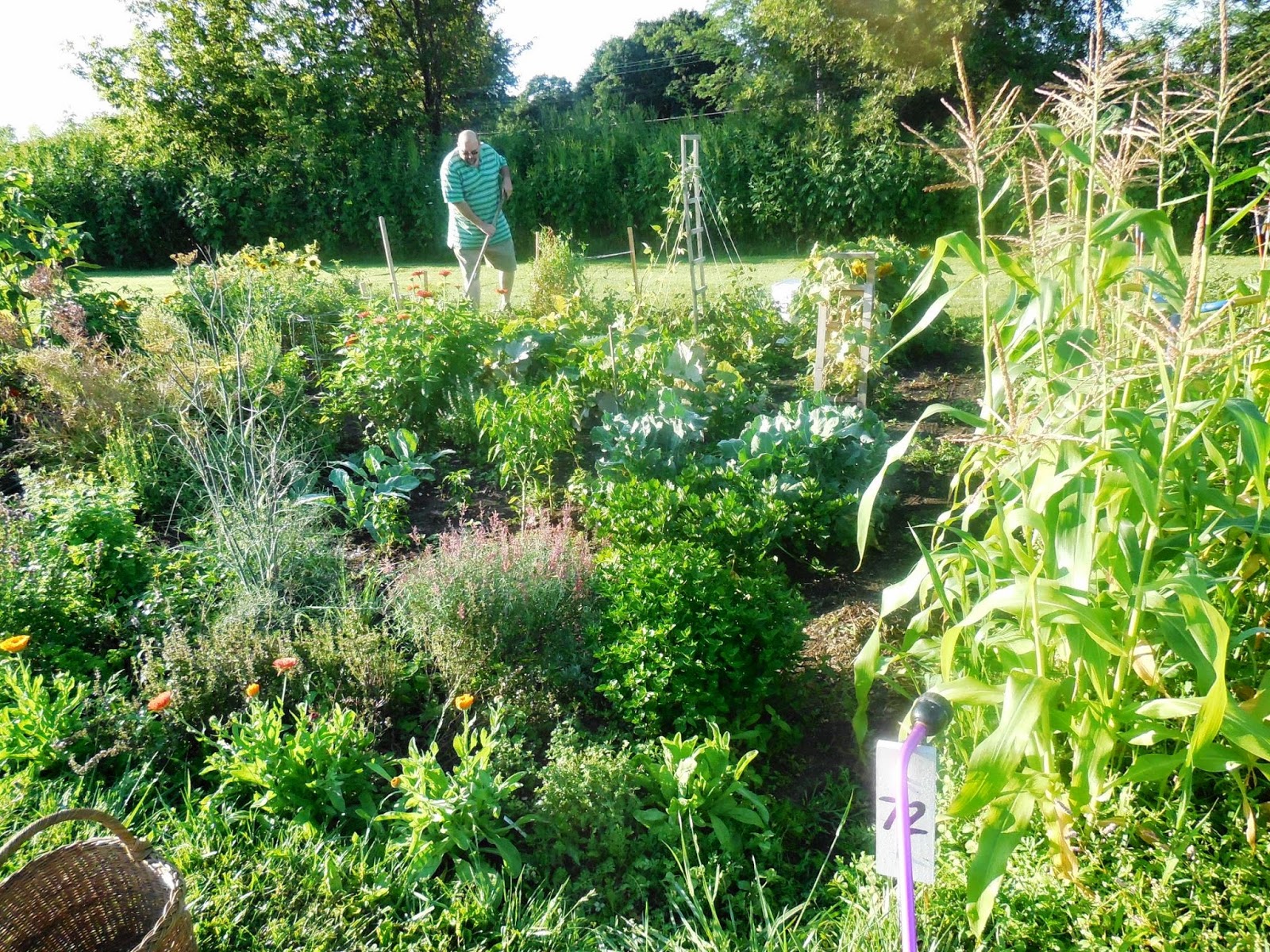
This week we continued to weed and harvest and water a bit, but there has been plenty of rain here recently, almost too much.  Everything is still looking very green and the tomatoes are ripening as we have had some warmer nights.
Looking to the east
Things are still very contained, even the herbs are staying somewhat separated from each other.

Looking to the west

The Kohlrabi I used to replace the lettuce is growing well.  If the small bugs that are eating the leaves on everything don't get tot them they should do rather well and give me a late September root crop.  Since we never planted carrots because we ran out of room this will be a nice item to go with the Celery root (Celeriac) that will mature around the same time.


The Zinnias were the happiest of plants int he garden this week.  As you can see they are covered with blooms.

The Calendula that I planted from seed along the front edge of the garden late in the season has come up well and is going into continuous bloom mode.  As soon as I clip off a flower others come to take there place.  This mix has two shades of lowers An orange that is like a pumpkin color and a red and yellow that looks almost like a straw flower.  So far not a single yellow bloom in the bunch.


I have so many calendula about to pop that I think I will need to plan to use them this fall in something special at the Backyard Patch.

The dwarf sunflowers are flowering and the heads are getting heavy and turning toward the ground.

My sunflowers are only about 2 feet tall.  But a few of the other gardeners in the community patch has full-sized sunflowers like these beauties.


There are signs of trouble in the garden however. Here is the climbing burpless cucumber vine and you can see the bug holes in the leaves and the dried and discolored leaves on the plant.  I am not sure if it is vertasiliam wilt, which I know is in the soil or the fungus from the potato bugs that I know have been plaguing these plants since they got about 2 inches tall.  Either way the bugs and diseases are winning.

Musk Melon


A mold called powdery mildew, has also formed on all the squash plants including the acorn squash and the zucchini.

After the great harvest we had previously the plant now struggles to produce one zucchini at a time.

My melon which was slow to germinate and slow to prosper is covered with this same powdery mildew.

Acorn Squash also has yellowing and drying leaves


Zucchini
 The herbs, however, are doing very well.  The thyme is in need of harvesting, but I forgot the paper bags, so I will do it next time I visit. The Dill and fennel have already started to produce seed.  I have decided to let them go to seed as I have other plants so I can save the seed for next year as I will lose all these plants at the end of the season when the community garden shuts down. Even after harvesting them last week they have grown and filled back in like they were hardly cut.

Silver thyme

Looking to the east (rather bright because of sun angle at 8 PM)

Looking to the west Mint int he foreground trimmed back so you can see the tri color sage.
In the next few weeks I will harvest these again, allowing some of the calendula as well as the bronze fennel go to seed and perhaps the oregano and savory as well so I can save the seed from those plants which did very well this season.

Tuesday, August 5, 2014

weekly update - August 4 Art in the garden


Chas is always jumping in to water before I get any work done in the garden and this week was no exception.  We did not get much rain this week, so as a result the weeds are more tame.
looking from left to right

I was feeling rather artsy as I took pictures this week.  Besides there was no weeding to do so I had some time on my hands as he hogged the watering wand.  Here are a few close ups of the plants:

A single sunflower, but more are on the way!

Christmas Lima Bean pods, not beans yet
Zinnias (the flower of the Men's Garden Club of Villa Park)

Traditional Hyssop pollinators love it!
mustard seed

Celeriac or root celery

Calendula

Artful watering!
A look at the thyme bed

Tuesday, July 29, 2014

weekly update - July 28

taken 7/26/14
The rain has stopped.  In fact this past week we had to stop by and water the garden several different days as it has not rained at all.  We also finally had several warm nights so that the Tomatoes which were on the vine staying green and orange finally turned that robust red you want them to be.  The zinnias are in bloom, the sunflowers are almost ready to bloom and the herbs are growing so quickly I could harvest them everyday.
Zinnias

Green peppers


This material coupled with zucchini, broccoli rabe, cucumbers, beans, peas and peppers and a wonderful selection of herbs all coming ripe made the garden a place of bounty this week.

Although we have harvested previously, this was the first time we filled that basket while at the garden. Here is a view in the basket.

I spread everything out on a table so you could see all that we retrieved on our water and harvest run on Saturday.


The purple basil to the left has been turned into herbal vinegar (check out this post if you want to make an herb flavored vinegar yourself.) The lemon balm (above photo, top left) was bundled and hung up to dry.  The genovese basil (front left) became a caprese sandwich with ham, mozzarella cheese, fresh tomatoes and a drizzle of olive oil on toasted bread.  It was marvelous!

There were enough beans to fill a pint basket (the square wood basket you see at the farmers market) which means we have at least a pound and can make a full recipe of a green bean dish.  Now to decide which one.  I will post the recipe once we decide what to make.

The broccoli rabe (just above the tomatoes in the above photo) is the sweetest broccoli I have ever tasted and as a result it rarely makes it to be cooked.  I eat it raw as a snack during the day.

orange thyme with needle-like leaves
The peppers have been coming in 1 or 2 a week for a month so each generally ends up in a salad, but this week I think we will make kabobs.  I have a great recipe for a Greek yogurt dip for kabobs that will be tasty!

I also cut orange thyme (far right by the peas.)  This is being left to dry in  a paper bag like the thyme I have harvested before (see July ___)   I generally cut only one thyme per day so I can remember which one I cut and keep them from getting mixed together in the harvesting basket.
Lemon balm before harvesting

Cucumbers - you have too look for the fruit, it is hidden under the large leaves.
You think you have none, then pull back and leaf and find more than one.
We grew a burpless cucumber which is very thin with few seeds.  We are going to turn this week's cucumber into a cucumber salsa and serve it over chicken and fish.

We harvested the bush beans today and have been debating harvesting the pole beans, but I know that both pole and bush beans will continue to produce until the vines die int he fall, so I think I will harvest the pole beans and save a later collection for drying to use in the winter.

From Bounty to Problems

Most of the issues this week are simple and not too upsetting or difficult to overcome.  The tomatoes still have the dark spot and the blossom end rot I have mentioned before.  This is due to the cooler wet weather.

You can see the black spot on this non-ripe tomato
And the peas have already started to dry so this will be the only harvest we get from them.  I will remove the plants and sow another row of peas for fall harvest.
peas turning brown 


Tuesday, July 22, 2014

Weekly update - July 20

Now you can really see a difference in the garden from last month to this month. The beans are growing up the trellis, the cucumbers have covered their  trellis and the herbs have doubled in size even with harvesting.  the nice neat patch of greens has turned into a tall unruly collection that shades the remaining lower growing greens protecting them from summer heat and giving me a longer harvest. And the tomato plants have filled in their cages and are starting to produce fruit.

JUNE

JULY

This week I focused on watering the garden as needed and weeding the herb garden.  Herbs compete well against weeds, so I tend to weed them last, plus I can enjoy the scents and fragrance while weeding so it is my favorite part of the task.  I always weed the rest of the garden first as a result.


I started with the raised bed of thyme.  Weeding thyme is a chose, as the thick mat of branches and leaves on the plants hid weeds well and reaching in to removed the plants at the base can be difficult.  As a result i weed the thyme bed every time I visit the garden.  It takes about 2 minutes to putt the dozen or so plants that stick up in and around the thyme, but it keeps them from taking root and becoming harder to pull later.


You can see how they plants are spreading into one another which is my favorite look.  You notice the variation in leaf shape along with flower and stem color more when they are closer together.

Progress

The zinnias are now blooming.  I took way to many pictures of this.


The lemon basil has started producing
seed heads which are hard to contain
on this smaller leaf basil plant.

You have to clip off the seed heads on
basil as soon as you see them.  Once
they put energy into seed production
the flavor and quality of the leaves
deteriorates.

As a result I now carry the scissors and
snip off the tops of all the basil plants during
each visit to the garden. It gives me a fist full
of leaves I can use in tonight's salad or main dish.


Overall we are in waiting mode.  The plants are just about ready to begin producing items we can harvest in larger abundance.  Just one more week and I will start getting more than one tomato at a time and a handful of beans.